Pilots Misbehaving – Are you a Fit and Proper Person?
THIS IS NOT AN ATTACK PIECE. But it will be confronting to read. It lists a catalogue of misbehaviours committed and perpetrated by pilots. Most of the poor behaviour mentioned in this article is committed by airline pilots but other pilots come into the mix, too.
With hand on heart, I believe nearly all tech crew are dignified and considerate people. They join the endless ranks of good people in our communities, striving to make things better for everyone, not just themselves. Every industry has its good and bad elements in the labour force. But the difference between most other careers and that of airline pilots is the impressive income and generous working conditions bestowed on tech crew. If you make it into the airlines, you move in a world of privilege and respect from others.
John flew for nearly 50 years, I flew for just 8. We can both categorically confirm that most of the tech crew we ever encountered were brilliant, funny and considerate people. When I was injured in a couple of turbulence events, the tech crew were concerned and caring. I loved working with most of the tech crew.
The support we receive from current and retired airline pilots is incredible. They encourage us on and actively endorse our efforts to help the younger generation of pilots. The significant majority of airline pilots are truly decent people. But then there are those who are not. Like in any industry, there are bad eggs. Do they deserve their licences? Are they ‘fit and proper’ people?
The perpetrators of the misbehaviours listed below not only harm their victims, they harm their thoroughly decent colleagues and bring the career into disrepute.
This article addresses what appears to be a growing elephant in the room. As retired aviation participants we are free from the political undercurrents that course through every workplace, and as we are retired, our involvement with aviation extends back a long way. John began his flight training in 1972 and my passion and involvement in the industry began in the early 1980’s.
I have been mulling over writing this piece for some time and I began to research and gather information last year. This tied in with our own personal experiences of ongoing pilot misbehaviour – whether on the job or behind closed doors.
The Basics
Perhaps we ought to define what NZCAA defines as a ‘fit and proper’ person. In their ‘Fit and Proper Person Assessment Policy’, CAA lays out what they consider when granting or renewing a licence to participate in aviation.
6. Fit and proper person test
The fit and proper person test is set out under section 80 of the CA Act 2023. When determining whether a person is fit and proper, the Director must, having regard to the degree and nature of the person’s proposed involvement in New Zealand’s civil aviation system, consider the following matters:
a) the person’s compliance history with transport (all modes) safety and security regulatory requirements.
b) the person's related experience (if any) within the transport industry.
c) the person's knowledge of the applicable civil aviation system regulatory requirements.
d) any history of physical or mental health problems or serious behavioural problems of the person.
e) the person’s use of drugs or alcohol.
f) any conviction of the person for a transport offence or an offence under the Health and Safety at Work Act 2015. g) any evidence that the person has committed a transport safety offence or has contravened or failed to comply with civil aviation legislation.
The subject of this article is focusing fairly and squarely on d) – serious behavioural problems.
NZCAA also make it quite clear that having a licence is to fly is a privilege…
When assessing whether an applicant is a fit and proper person under section 80 of the CA Act 2023, the Director may also consider:
• if they have the appropriate qualification, training, experience, and skills needed to exercise the privileges under the document;
• if they have the capability to fulfil the obligations and responsibilities associated with the privilege being conferred; and
• their past behaviour. Repeated conduct or patterns of behaviour may provide an insight into the applicant’s attitude and character, their likely future conduct, and whether the applicant has learned from past mistakes. For example, evidence of previous noncompliance with the law, such as criminal conduct or transport related offending, is highly relevant to the assessment.
Let’s define privilege. According to the Cambridge Dictionary:
an advantage that only one person or group of people has, usually because of their position
an opportunity to do something special or enjoyable
I imagine the above may come as quite a surprise to some pilots. That their governing body sees their licence as a privilege rather than a right. We’ll come back to this point later.
The Job
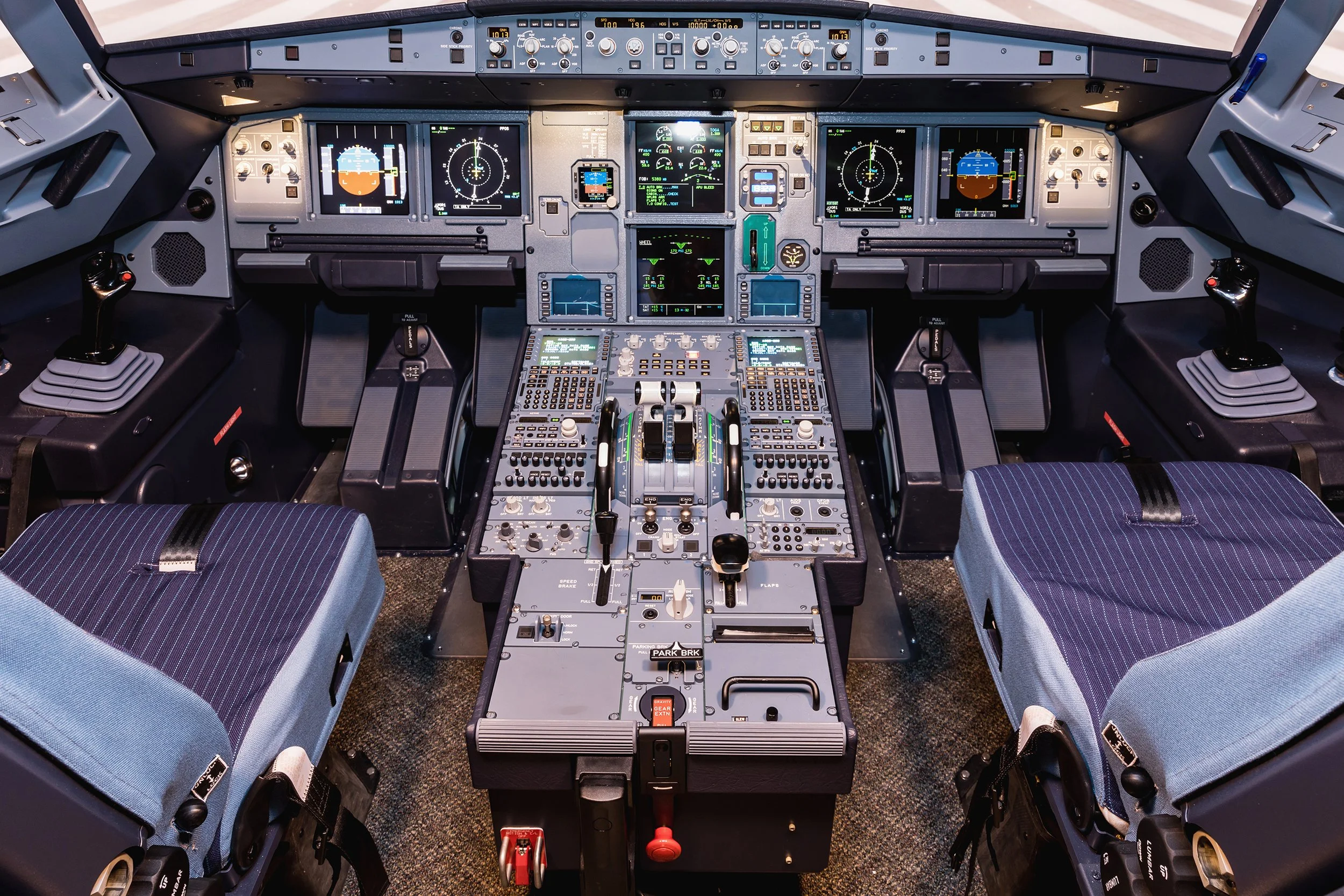
The role of airline pilot is not particularly arduous. As one of our flying friends has said, “The role is generally 90% boredom and 10% terror” and we are inclined to agree. Tech crew sit down for a start – in nice sheepskin covered seats designed to protect their butts. At 400 feet after take-off, autopilot is engaged, the tech crew push their seats away from the instrument panel and controls, then spend the following hours chatting whilst monitoring the instruments; and waiting for the flight attendant to bring round after round of refreshments throughout the length of the flight.
John and I preferred our shorthaul crew days as they were busy and sometimes quite rigourous, but once you were on the longhaul fleet the job was considerably different. The longer the flight, the more tech crew are on board sharing the load and private beds are provided. If the flight is long enough for there to be four crew on board, the crew take two hour lie down breaks every two hours, for example. The autopilot is disengaged just before landing and the tech crew fly the remaining flight below 400ft – unless the plane is completing an auto-land, where the plane lands itself.
Modern airline piloting has really been reduced to monitoring systems. The tech crew are there to step in, in the event of something going pear shaped. We ran an article in 2024 about how the FAA are reconsidering the current requirement for airline pilots not to hand fly the aircraft as it is becoming apparent that airline pilots are, well, losing the most critical of skills – how to actually fly the plane. https://www.pauwelsflyingscholarship.co.nz/blog/faa-shifts-focus-to-pilot-manual-handling-skills
With the reliability of the aircraft engines and systems radically improved, accidents and other adverse outcomes are now very rare – vanishingly rare. Newsworthy rare. In recent years there has only been one fatal accident for every 5.6 MILLION flights. You have a one in eleven million chance of dying in a plane crash compared to a one in 97 chance of dying in a car crash.
Ok, ok, so that’s quite a simplification of the role but you get the gist. For context, a close family member of ours is an interventional radiology consultant. He’s paid about the same as what a widebody captain is paid. However, he spends up to 18 hours a day on his feet delicately removing blood clots from people’s brains and hearts amongst other life saving procedures. With on call duties thrown into the mix, he’s doing this for up to 7 days a week. Every week.
You don’t need a degree to become a pilot, but you do need aptitude and sufficient hours PIC. The Diploma in Aviation takes about 18 months to complete and 90% of students pass. A basic degree for most careers is three years at university. A legal degree takes four years. A medical degree is between 12 and 17 years of university and training. And yet, an airline pilot earns more than almost any other careers. Heck, jet fleet tech crew generally earn more than Ministers of Parliament.

I believe it is a fair call to say practically every other career requires more physical and/or mental exertion on a daily basis than that of an airline pilot – and isn’t paid anywhere near as much. Once you are in an airline, although you start at the bottom, being a seniority based system for promotion you don’t move up the income bands on merit – promotion is based on length of service and proving you can do the job.
Nonetheless, John and I know intimately how tricky it is to become a pilot. Along with train driver and firefighter, being a pilot is a dream most kids have at some point. The training will set you back about $150,000 and there are precious few jobs for freshly minted CPL pilots in New Zealand. We know that 71% of qualified pilots will leave the industry having never found a paid flying role. Making it to the airlines is the dream secured. With identical qualifications as other pilots and the same number of hours PIC, it almost boils down to the luck of the draw who gets into the airlines. A true privilege. Once you are employed by an airline, life is sweet thereafter. Yes, you need to pass an annual medical and pass sim checks twice a year but that’s it.
I feel there would be very few people who begrudge the pay that airline pilots receive. However, being paid so much for relatively so little in the way of day-to-day hard work comes with a hefty expectation pilots will at least behave and be decent human beings in return.
We believe that the general public, less well paid crew members (yes, the mainly female flight attendants, are paid minimum wage these days) and more so, the families of these pilots are right to expect respect and humility from pilots.
The Poor Behaviours
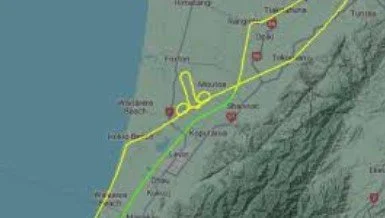
Phallic Graffiti - Drawing dicks in the sky.
John recently had need to caution one of our winners when they posted online, as a celebration, the puerile antics of fellow students. Taken as a single act, there is perhaps not too much concern, but it does indicate a specific thought process. It’s the first step on the way to more offensive behaviours.
So why do a lot of males feel a need to draw pictures of a dangly piece of flesh momentarily inflated? There are many theories, and many psychologists surmise it is the need of the illustrator to impose their power and claim the space as theirs; to symbolise they hold power over others. Which, in my view, is kind of sad.
50% of the world’s population can actually create new humans, not just inflate some skin and muscle for about…ooh… a minute. The female members of the population made the males. But you don’t see women drawing their genitalia all over everything. So instead of demonstrating power, maybe drawing dicks demonstrates insecurity instead. Or a lack of confidence. Or an urgent plea to ‘Look at me, look at me!’

Arrogance. Abusing those working in lower paid jobs or not following law because it’s beneath you.
Unfortunately, I have seen pilots have a go at a waiter/waitress for taking too long or not getting something right and verbally abusing them for it. Another example is verbally abusing a check out operator for giving the wrong change. Seriously? A 5 minute wait, or a 50c short changing is not going to be detrimental to you to the point of needing to abuse others.
And there are pilots out there that feel flight attendants are not worth protecting. I’ve heard stories where pilots have declined to help flight attendants with unruly passengers. If tech crew remain protected in the flight deck by a firmly locked Kevlar door but decline a flight attendant’s request to call for ground help for arrival or to off load prior to take off – it’s a betrayal of being a team.
After severe turbulence had severely injured 5 of 8 flight attendants on a B767 coming into Christchurch, the captain refused to extend the downwind leg to allow the remaining three flight attendants to prepare the injured crew and cabin for a safe landing. Even after the purser told him of the apparent injuries (broken leg, broken nose, serious open wounds, head and neck injuries to name a few) he refused the purser’s request for an ambulance or even ground support as he wanted to finish work on time to attend a BBQ later in the day. Read the story here - https://www.pauwelsflyingscholarship.co.nz/blog/diversity-drives-the-engine-of-the-scholarship-8yjw3-lrzwz-ff5n8-ybkr9
Recently (2024) there was the uniformed pilot who stripped at airport security in Queenstown in anger at airport screening, causing a significant delay to the flight as a new crew had to be flown in to replace him.
Then there’s the airline pilot who lost his licence because he insisted on flying his own aircraft without airworthiness certification.
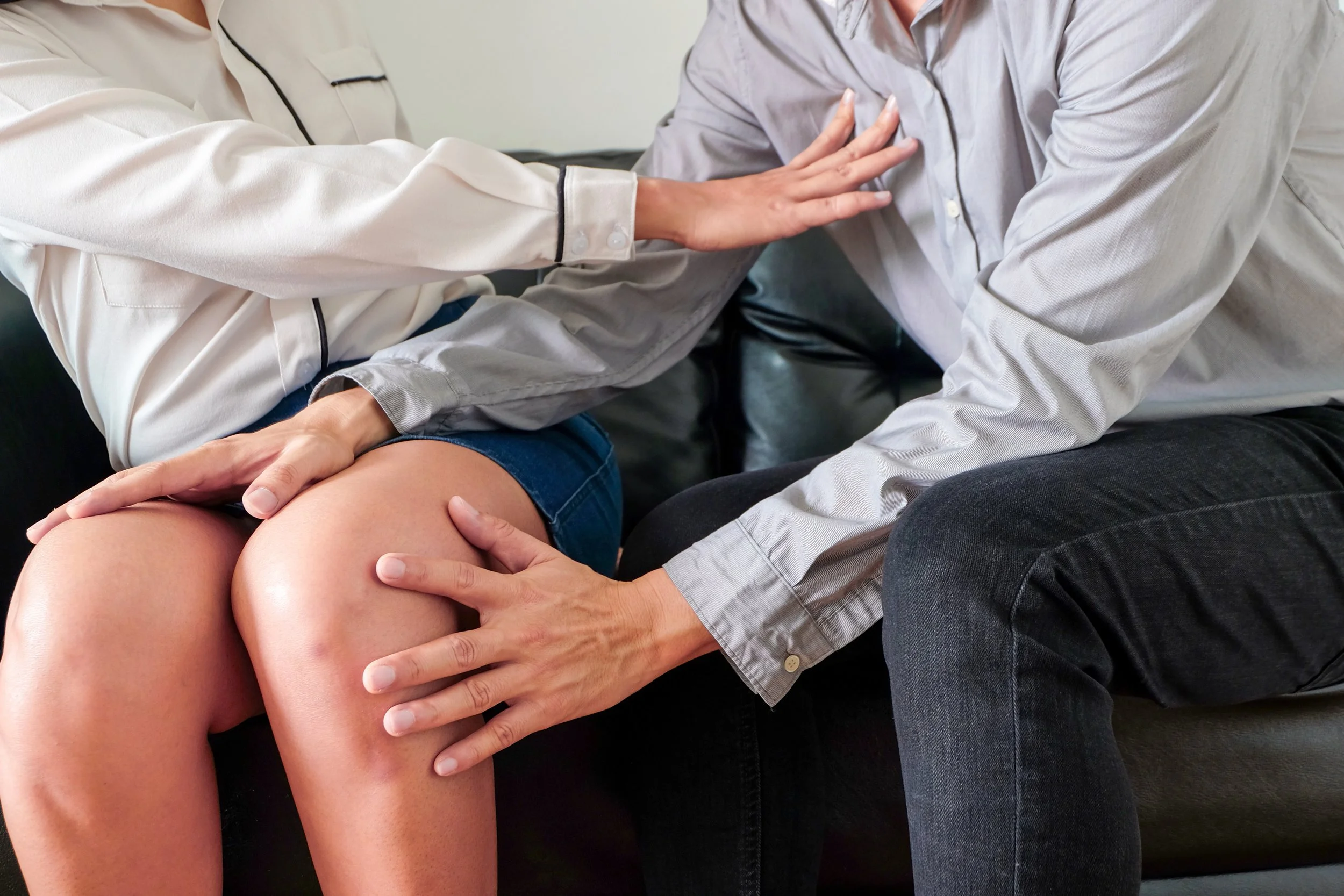
Sexual Predators. Women are prey not equals
From viewing porn in view of flight attendants in the crew room to breaking into flight attendant hotel rooms to get to the flight attendants, this is a long term problem. I even have my own encounters going back over decades. And I’m just one ex-flight attendant – how many others have similar stories?
· Minutes after arriving at an overnight hotel, coming out of my hotel bathroom to find a captain standing near the bed. He had an extra key for the room. I was in my early 20’s and he was in his late 40’s.
· Being chased around a coffee table as I tried to get enough distance on a first officer to make it to the door before he could reach me.
· Being propositioned by a married captain in the hotel swimming pool in Fiji.
· A captain turning up at my house, uninvited, unannounced at 11pm at night.
· Being stalked by a United Captain for weeks after I offered to show him around Auckland city when he was on a long layby over a Christmas period. He had been invited to our weekly crew drinks evening and some of us offered to entertain him over his week-long layby. I was being friendly, but he wanted more, a lot more. He even managed to get access onto the apron at the Domestic Terminal to be waiting for me as I got off an aircraft – how he knew of my work schedule can only mean he was helped by others. He was about 30 years older than me, and, unlike the previous examples where I was a married woman, I was a single mum with two toddlers.
Throughout the intervening decades, similar stories have made their way to us. Definitely evoking the ‘ick’ feeling. Even now there are stories of pilots continuing these practises.
· John can recall a pilot who got the nickname ‘Spiderman’ because of his pursuits of climbing around the outside of hotels to access flight attendant rooms.
· Then there’s the pilot caught self pleasuring in the crew rest area. A poor flight attendant was called on to check on him as he hadn’t responded to the crew call chime that he had to return to the flightdeck.
· And the tech crew member who sexually assaulted a flight attendant on Norfolk Island. This particular incident also has a huge dose of arrogance as he took his case of being sacked by the airline all the way to the appeals court. You can see how his mind worked – sexually attacking someone is fine but he didn’t like the consequences of his own actions affecting his own ego. Huge sense of entitlement, much?
· We are also aware of a video currently doing the rounds of a tech crew member committing sexual harm. But it also beggars belief that other crew seem to think it’s fine to repost the video. They are part of the problem too.

Misogyny. Women are second class citizens and deserve what’s coming to them
Man first flew in a powered aircraft in 1903. Woman first flew in… 1903. Fancy that. Wherever, whenever and however men have flown, so too have women. And yet men still work hard to deny women the right to be involved in aviation. This is a very real phenomenon. It has not abated over the years. 95% of all pilots are men. Air New Zealand only allowed women to join the pilot ranks in the early 80’s. John was on the last all male training intake in 1979. It is only in the last 10 years that airlines have taken seriously the effort to get more women onto the flightdeck.
John flew a number of times with the pioneer female airline pilots and asked a few of them about how their journey had been up to that point. They shared that they had not experienced any issues with misogyny and had generally been well treated. So, what has changed in the male psyche to make it so hard for female pilots now?
We have stories on our blog page of women’s efforts to be accepted as equals in aviation. Some of the stories are awful – with outright misogyny inflicted at every step – in training, at aeroclubs and in the airlines. Although at corporate level, larger airlines are now actively promoting the hiring of women, at individual level, it can still be an unnecessarily hard journey for women to attain equality or even respect.
Men may come up with excuses for their behaviour and attitudes, implying that women aren’t up to the job, but these misogynistic opinions are just not supported by facts. Like the old nugget - women drivers are worse than men - is not supported by facts (75% of deaths and injuries in car accidents are men, when the number and lengths of trips driven by women and men are largely similar).
A 2025 study by the University of Waterloo found that female pilots tend to outperform male pilots under high-pressure scenarios, maintaining better flight control and making fewer errors during emergencies. Despite identical visual focus, women displayed more consistent, accurate, and reliable performance, possibly due to superior stress resilience. The study identified that women pilots demonstrated better performance under pressure, made fewer errors, had better situational awareness, and made consistently better landings. https://uwaterloo.ca/news/media/female-pilots-perform-better-under-pressure-study-finds
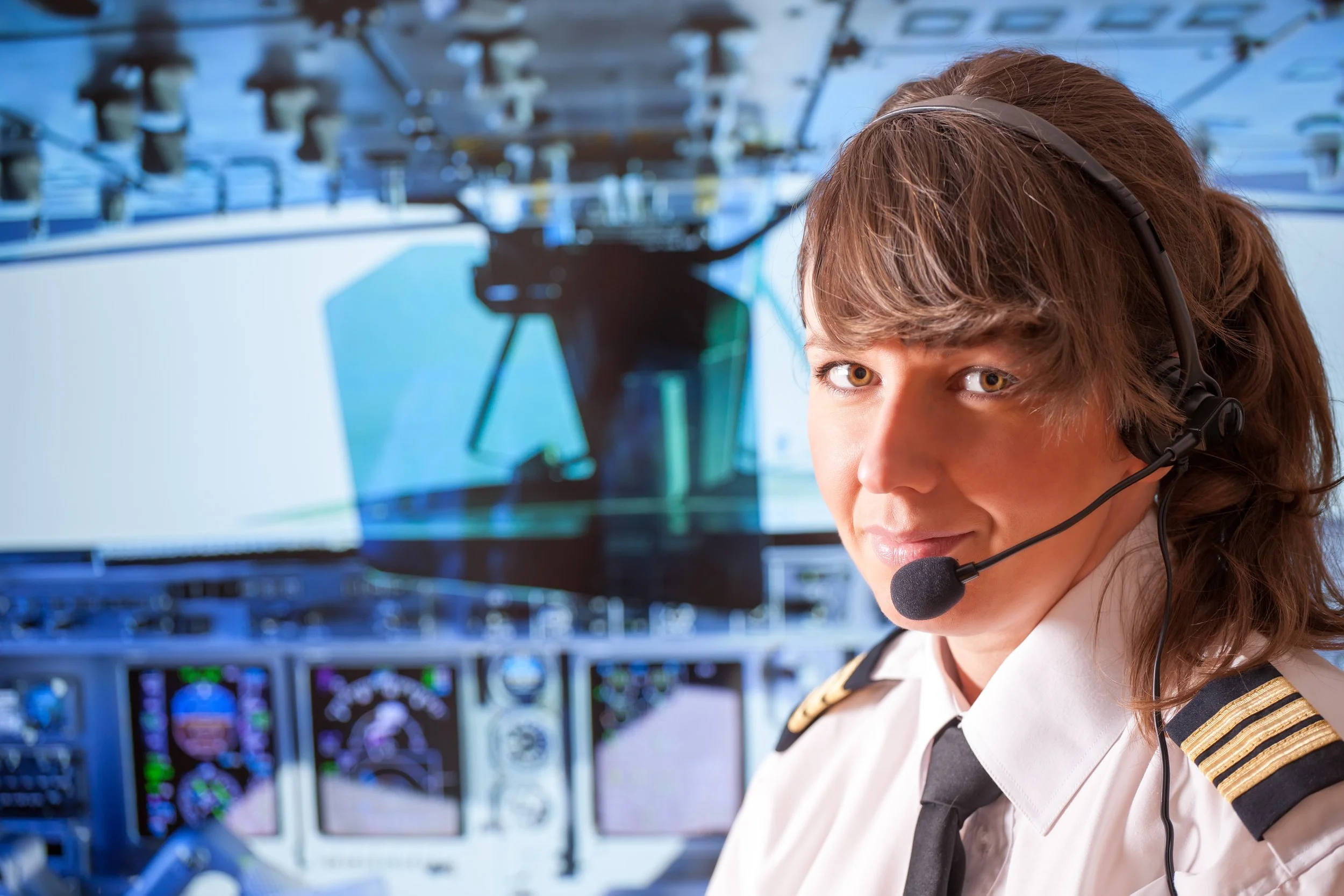
It is a well known phenomena, with multiple examples reported, that male tech crew will try to belittle their female colleagues. Condescending behaviour is revolting. Often delivered under the mantle of a ‘caring older guy’, comments are made questioning the female pilot’s abilities or motivations. Women pilots are asked how they juggle having a family. The ‘old boys’ network encourages sexist ‘jokes’ and behaviours and when a woman rightly objects, she is told she is overreacting or can’t ‘take a joke’.
We have recently heard how one of our winners had been sexually harassed by an instructor. Can you imagine being stuck in the tiny cockpit of a training bug smasher and your instructor – who chooses whether you can pass the fight test or not – is mauling you sexually or making sexual comments whilst you try to fly the aircraft. The mind boggles.
But the misogyny doesn’t just show itself towards other pilots – current male pilots are actively participating in hate speech towards female aviation participants. Specifically, a female aviation commentator. We know the names of some of these pilots.
According to Netsafe, this behaviour is becoming a serious issue. They report that online hate speech in New Zealand is increasingly targeted, with women in public roles, such as politicians and commentators, facing significant, often gender-based, abuse. Female journalists and commentators frequently experience hate aimed not just at their work but their identity, leading to high levels of harassment.
You imagine this sort of behaviour from uneducated, unemployed 30 year old trolls living in their parent’s dark basement. But the fact this behaviour is being actively carried out by some of the best paid professionals in New Zealand is gobsmacking. The unfettered sense of male entitlement is breathtaking. Are these particular pilots ‘fit and proper’ people as required by their licence? I’d love to know what their employers and CAA are doing about it.
Just last week we were surprised (and sickened) to receive a Facebook message from a current A320 Captain, known to John, irritated we had quoted a women commentator over something as innocuous as what her training school were doing to mitigate the fuel crisis. He used hateful language against her and was trying to shame John for interacting with her. We have been fortunate not to have been the target of this rubbish until now. Personally, I couldn’t believe the timing - considering I was in the process of writing, researching and gathering information for this article at the time.
Here is the message, published with permission from the targeted woman. I can confirm the guy got a strongly worded response from me and further actions taken. John and I won’t play his game or be bullied into it.
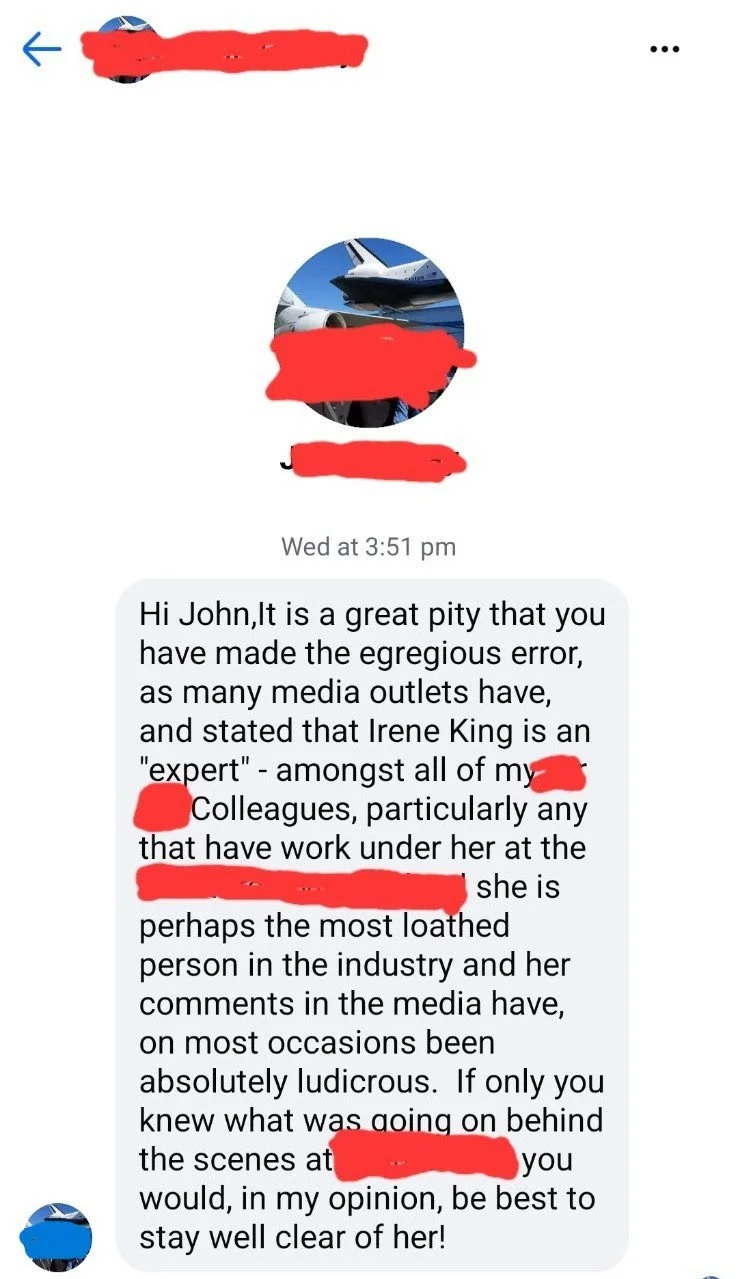
In further discussion with Irene, she supplied the following comment for this article:
”Exposure to different demeaning comments, more direct and more personal, electronically communicated caused me recently to trigger Netsafe and protection under the Harmful Digital Communications Act. The comments were venomous, career threatening and derogatory purportedly written on behalf of all the pilot’s colleagues especially those who worked “under me.” The words are those of a coward and a bully. I have requested the pilot’s airline to facilitate a meeting between myself and this individual; a written apology and refrain from directing these spiteful and hurtful words at anyone else. Enough is enough – this brings our industry into disrepute.”
All the above are the behaviours exhibited whilst in the work environment. Openly committed or easily discovered or reported. But what happens behind closed doors can be considered much, much worse. It’s insidious.
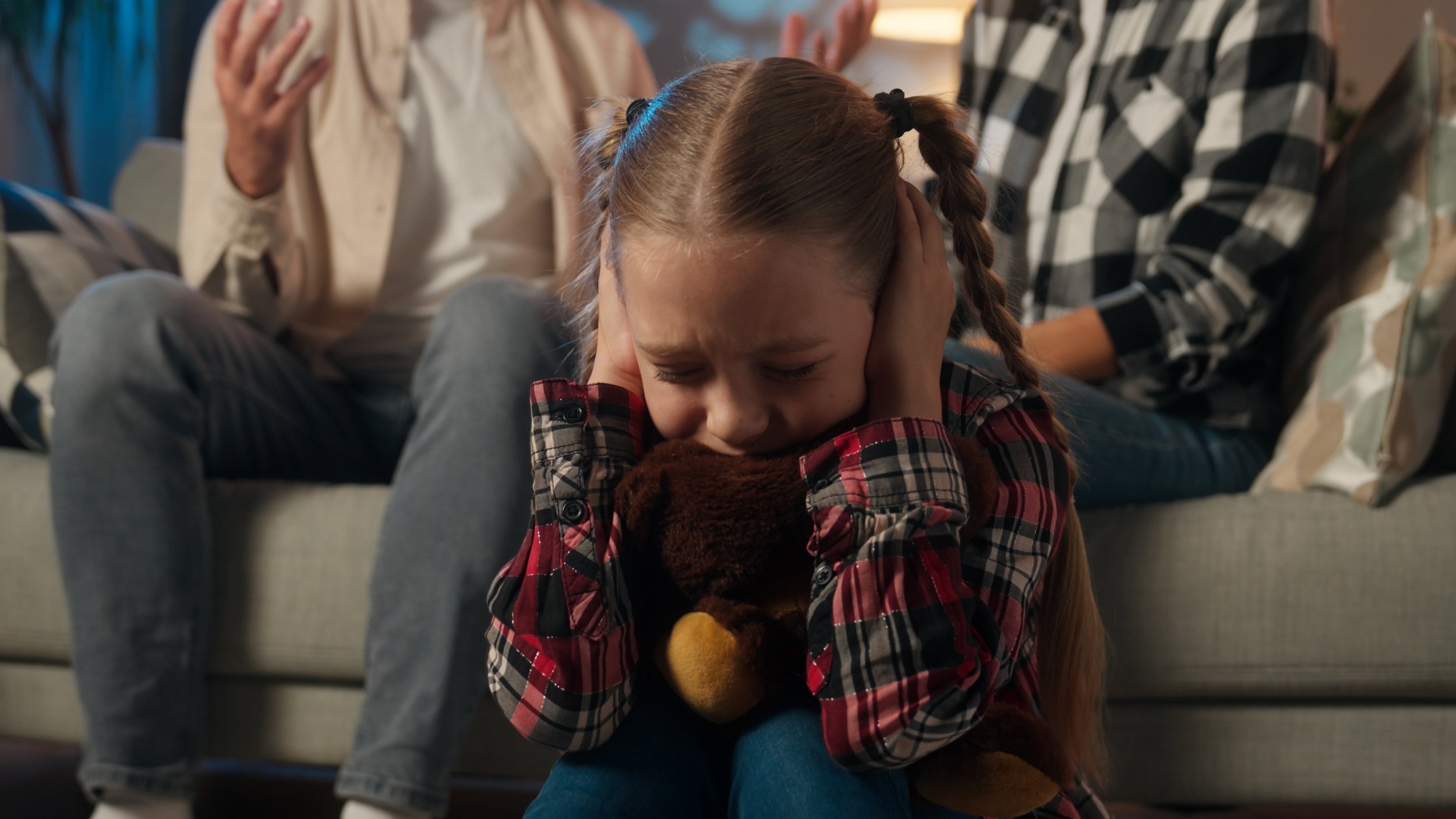
Family Harm – abuse of or control of family members
We are aware of a number of examples where airline pilots seem to be good guys in public but terrorise and systematically destroy their family members. It was reading an article, last year, about difficult divorces that inspired me to write this article. That and our personal experiences which we’ll get to shortly.
According to divorce lawyers in the US, pilots are in the top five group of career professionals more likely to have harmful behaviours towards their families (the other careers are firefighters, police, military and surgeons). The reasons given are that airline pilots are generally treated like gods in their workplaces and by the public. They aren’t prepared to be told ‘No’ to a demand or request when at home. When I was flying, we flight attendants certainly related to the old joke – ‘What’s the difference between God and pilots? God doesn’t think he’s a pilot’.
We have known pilots who have openly belittled their grown children or blamed their children’s perceived failures entirely on the mother. We know of pilots who openly talk about their divorces going through the court systems as they are hell bent on making sure their wives don’t get a 50% division of assets. One pilot had two young adult children die in different situations whilst he viciously fought their mother through a protracted divorce. He heartlessly believed their deaths were nothing to do with his behaviours.
We’ve known of pilots having affairs or talking disparagingly of their wives. Even going as far as demanding their children have paternity tests to prove they are the father. One pilot comes to mind who refused to take on his young son when the mother died.
I was catching up with a group of pilot’s wives not so long ago and one spoke of the ex pat life of living in Dubai as pilot’s wives. Over in the UAE, there are very little protections for women – even if you are an ex-pat. She spoke of frightful harm inflicted on wives and children by some of the pilots there. A situation made worse by the fact that the women can’t escape the marriage and head back to their own countries because their children would be taken off them by the government - as the law insists children belong to their fathers. Mothers have no rights.

Domestic Violence. Violence targeting an intimate partner
When we read these two words, what often comes to mind is an image of some well built man wearing a black singlet (an item of clothing STILL marketed as a wife beater!), a bottle of beer in one hand and a fag hanging on his lips. A close family member of ours is a social worker specialising in working with perpetrators of Domestic Violence. They come into her organisation via the police and court system. She says that pilots are represented there in the same proportion as other career groups.
Irene King, like ourselves, has supported a pilot’s wife through violence:
”A pilot would return home and expect deference and respect as opposed to slotting back into the daily dynamics of life in New Zealand. Alcohol and drugs became the recreational activity of choice. Having to pick up the pieces, seeing a close girlfriend sitting in A&E beaten up by her pilot partner or sheltering their children for several days was not what I expected.”
However, when pilots are the perpetrators of Domestic Violence, it’s not often so obvious. A pilot can lose his licence if he is convicted of Domestic Violence, so the violence is inflicted differently. It’s not always physical violence. The violence can be inflicted in a variety of ways.
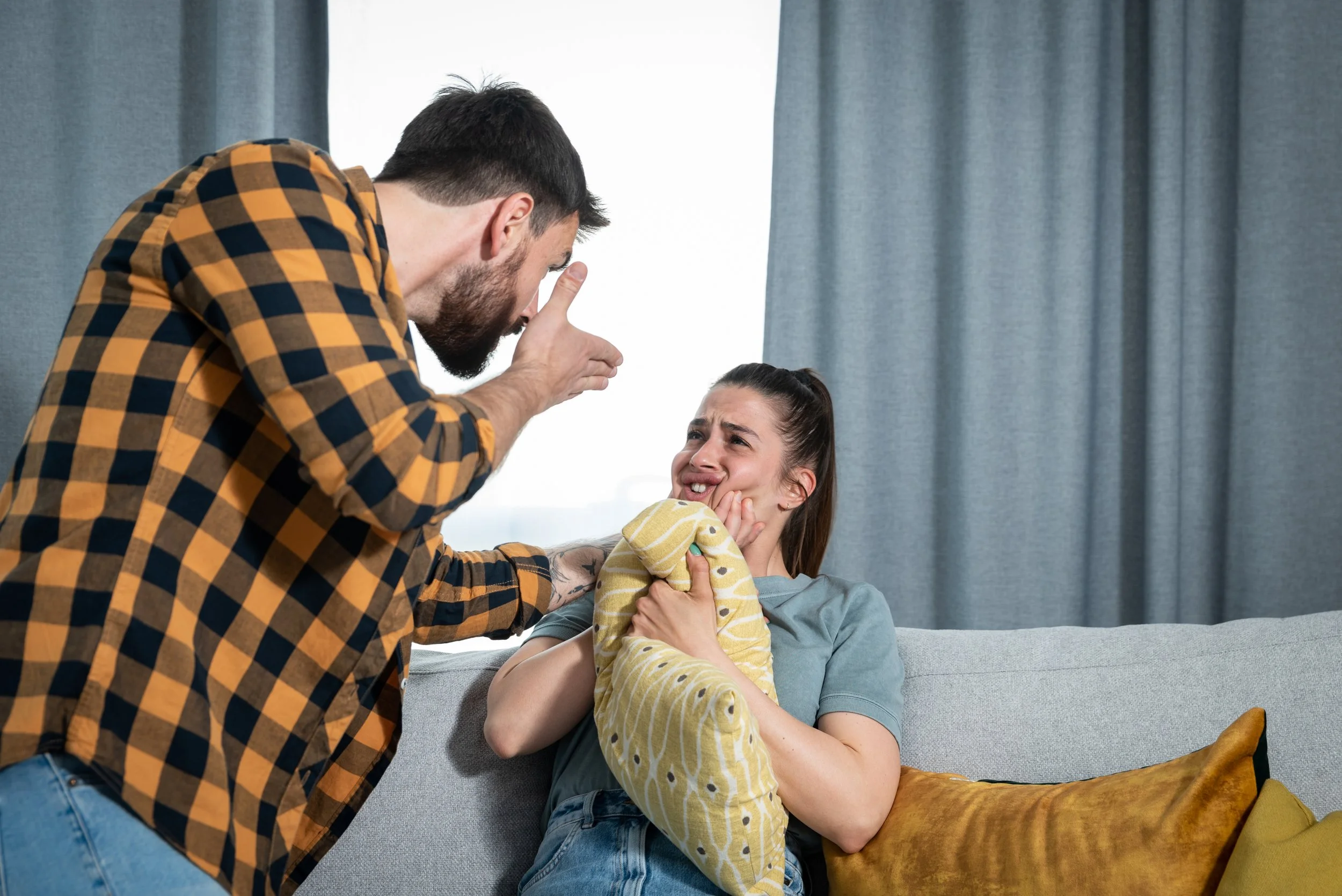
Coercive Control seems to be the modus operandi of those with too much to lose if they are caught. Those in prestigious positions of power and control inflict pain on others at will, but secretly and over time. John and I are helping a pilot’s wife navigate her way through a protracted divorce.
She gave up her career she had professionally trained for, raised their kids almost single handedly; and run their houses and their financial affairs for decades. He gaslit her saying she was losing her mind, and her memory of events was wrong - amongst other things. As he approached retirement, he got himself a new partner and bought himself a new home with shared money and never told his wife until his new life was in place. My friend battles her way to a mediated divorce settlement.

Discussion
What factors are in play that cause some men to become so heinous? When do these behaviours begin? At home as children? In flight training schools? Indoctrination from older or other pilots?
Do the unions and/or the airlines unintentionally foster or encourage this sense of entitlement? How does the ego of some men rise so high they see nothing wrong in inflicting substantial harm on others? Some, like my friend’s husband lead double lives. How much energy must that take? How many lies do you have to remember to not be caught out?
And when someone is discovered, what do the discoverers do? What do management do when notified? How would CAA act if they had these behaviours brought to their attention?
Regarding CAA, their ‘Fit and Proper Person’ policy does say they will investigate complaints and concerns about pilot behaviour from anyone – not just police or employers:
Section 80(2) of the CA Act 2023 specifies that the Director is not confined to the matters set out in the FPP test (see 6.1 of this policy) and may consider other matters and evidence as relevant. This may include the Director:
• seeking and receiving additional information (such as a Summary of Agreed Facts); and
• considering information obtained from any source, including other individuals or agencies. This may also include information obtained during current or open investigations.

Do you identify with some of the above?
If you have read the above article with a growing unease that you have participated in some of these behaviours – maybe intentionally or unintentionally – then you are well placed to stop and start afresh. If you aren’t sure what to do in the first instance, here are a couple of organisations that can help you. Irene King, a victim and observer of some of the above behaviours has magnanimously advised about two organisations that you can access:
Many businesses operate EAP programmes, (Employee Assistance); at Ardmore Flying School we have a wellness advisor. Her role is to operate across the organisation providing professional development to our instructors and back-of-house staff plus direct one on one support for our students. Students can activate this directly by contacting her or alternatively if our staff are identifying issues there can be one on one with myself or the staff member directly concerned. This approach fosters accountability, builds back the individual better and supports both psychological and physical wellbeing. The “success” rate from this approach is more than 90% full return to flying. Those going through this approach make their own choices – one of those maybe not to return. However, our observation is these individuals have an elevated level of satisfaction that they too have been “built back better.” If you would like to know, more go to our web page Ardmore.co.nz and information on our wellness advisor is on the “staff” page.
In addition, the school are proud members of PAN (the Peer Assistance Network). While focused more on licensed pilots and air traffic controllers this network is now global, although having its roots firmly in the work of New Zealand’s airline pilots and air traffic control community. This network offers confidential nonjudgmental support and assistance for all pilots and controllers who have challenges which the individual assesses are or short of requiring professional support from their AME or GP. Peer support is invaluable – they understand, many have been there and experienced that. Recently working with the NZ CAA “Safe Haven” has been developed – again a support mechanism for those needing a higher level of professional support but still not triggering the AME threshold. Both PAN and Safe Haven are world leading initiatives to “build back better”.
If you have read the article above with despair, recognising abuses that have been inflicted upon you, you are not alone and most importantly IT’S NOT YOUR FAULT!
In the first instance approach your organisation’s EAP team. If your organisation doesn’t subscribe to this service, then you can talk to someone at any of these services:
Are You OK? Ph 0800 456 450 – Family Violence Support
Safe to Talk Ph 0800 044 334 – Sexual Harm Support
Victim Support Ph 0800 842 846 – for any victim of harm
Netsafe Ph 0508 638 723 – for support and to report Harmful Digital Communications
PAN Ph 0800 PAN 100 or www.pan.org.nz - for Tech crew and Air Traffic Controllers
HIMS www.hims.org.nz - a support group for aviation members using drugs and alcohol and other concerns